Stop Burning Margins: The No-BS Guide to Help Desk Software Solutions for Tree Care
Customer support chaos ruins margins and loses high-value tree care jobs. Here is how implementing dedicated help desk software solutions transforms your office efficiency and bottom line.
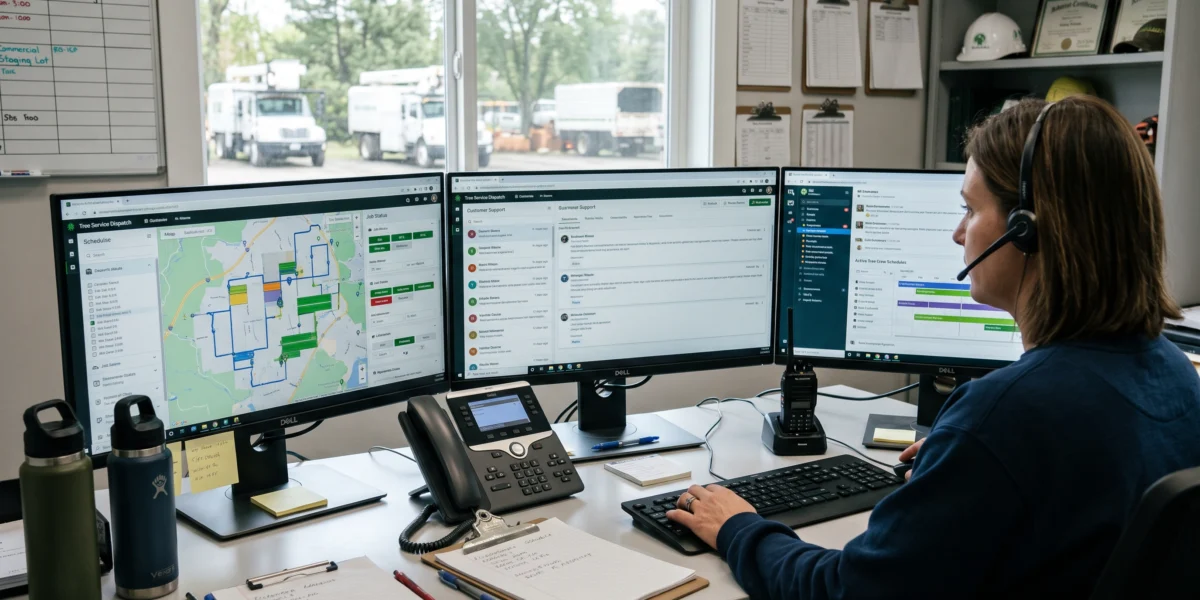
Let’s get brutally honest: if your tree care company is doing over $1M in annual revenue, your current customer service workflow is almost certainly leaking cash. You have leads coming in through website forms, emergency storm calls blowing up your office lines, homeowners texting your sales reps directly, and property managers emailing an inbox nobody checks until 6:00 PM.
When customer requests slip through the administrative cracks, you do not just lose single jobs—you destroy lifetime customer value and burn through precious marketing budget. Implementing dedicated help desk software solutions is no longer a luxury reserved for tech startups; it is a mandatory operational upgrade for high-volume tree care operators in 2027.
The Hidden Financial Cost of Mismanaged Communication
Every missed phone call, delayed email response, or lost estimate request carries a hard dollar cost. When a homeowner needs a $6,000 hazardous removal or a commercial property manager requires immediate clearance for a storm-damaged white oak, they will not wait two days for your office staff to sort through sticky notes. They will simply call the next local tree service on Google.
If your administrative workflow relies on scattered text messages, paper messaging pads, or unorganized personal cell phones, you are inviting chaos into your operation. To protect your margins, you must implement structured client services software for tree care that converts incoming inquiries into central, trackable support tickets. Without accountability, your office staff spends hours playing phone tag instead of scheduling high-ticket estimates for your sales arborists.
Core Features to Demand from Help Desk Software Solutions
Not all customer support platforms can handle the chaotic, real-time realities of green industry operations. Lightweight, generic help desk tools designed for web apps will fail under the weight of field updates, job site delay notifications, and emergency storm dispatches. When evaluating help desk software solutions for your tree business, demand these essential operational capabilities:
- Multi-Channel Ticket Consolidation: Every incoming phone call, SMS, contact form submission, and email must convert into a unified support ticket instantly.
- Automated SLA (Service Level Agreement) Routing: Automatically flag high-priority leads, commercial accounts, or severe property-hazard emergencies so they bypass standard queues.
- CRM Database Synchronization: Ensure every customer support ticket logs straight into your primary customer record. When you clean up your CRM database, structured support data gives your estimators full context before stepping onto a job site.
- Integrated Two-Way SMS: Modern homeowners rarely answer phone calls from unknown numbers, but text messages enjoy a 98% open rate. Your office needs centralized SMS messaging linked directly to the job file.
Standalone Help Desk vs. Integrated Field Service Platforms
A frequent operational mistake tree care business owners make is expecting their field management software to handle complex customer support workflows seamlessly. While modern platforms reviewed in our ServiceTitan vs Jobber comparison excel at dispatching bucket trucks, tracking tree crews, and issuing field estimates, their native customer support ticketing modules are often bare-bones.
This is where growing operators must evaluate their true organizational volume. Is Zendesk help desk software worth it for tree care companies, or should you keep everything inside your field service tool?
If your enterprise runs multiple crews, handles dozens of daily customer inquiries, and processes complex commercial work orders, plugging a dedicated help desk tool into your scheduling software delivers unmatched visibility. It ensures no customer complaint, gate access code, or post-job cleanup request gets buried in a field technician’s inbox.
Driving Efficiency with Response-Time Metrics
Speed to response directly determines your gross margin. High-margin tree work—such as large crane removals, utility line clearing, and emergency hazard work—consistently goes to the contractor who responds first with clear, professional communication.
When you fix your customer support infrastructure, you instantly eliminate administrative bottlenecks. For a deeper breakdown on eliminating communication waste, review our guide to stopping profit bleeds with customer care software.
Hold your office manager and support reps accountable to these three essential support metrics in 2027:
- First Response Time (FRT): The total minutes elapsed between a client’s inquiry and your office’s first response. Target under 15 minutes during operational business hours.
- Mean Time to Resolution (MTTR): How fast an open issue (e.g., property damage inquiry, schedule change request, revised estimate demand) is completely resolved and closed out.
- Inquiry-to-Estimate Conversion Rate: The percentage of raw support tickets and inbound inquiries that convert directly into scheduled, paying sales appointments.
Execution Roadmap: Roll Out Your Help Desk System
Introducing new office software without a strict implementation protocol leads to staff frustration and wasted money. Execute this operational playbook to deploy help desk software solutions successfully:
1. Audit All Communication Ingress Points
Map every path a customer uses to contact your company today: office landlines, web forms, Facebook messages, Google Business Profile messages, and sales representative cell numbers. Force all digital entry points to route directly into your help desk ticket system.
2. Establish Strict Ticket Ownership
Assign dedicated ownership rules. General inquiry tickets go directly to your primary office receptionist (Tier 1). Billing disputes, active job site complaints, and commercial re-quotes escalate automatically to your general manager or lead sales arborist (Tier 2).
3. Build standardized Macro Templates
Create standardized, professional response templates for recurring customer inquiries: Certificate of Insurance (COI) requests, utility mark-out updates, pre-job site preparation guidelines, and online payment links. This slashes response times from minutes to seconds.
4. Enforce “If It Is Not In The Ticket, It Didn’t Happen”
Eliminate informal verbal handoffs between estimators, office staff, and crew leaders. Every agreement, schedule modification, and site notes update must be logged inside the centralized support ticket attached to the job file. Accountability drives profitability.
Stop treating your front office like an afterthought. Invest in professional customer support tools, hold your staff to strict response metrics, and build a system designed for sustainable scale.
Operator Insights
Join 2,000+ tree care owners getting our weekly operational tech teardowns.