Stop Bleeding Profits: The Hard-Truth Guide to Client Services Software for Tree Care
Managing a modern tree service on paper quotes and scattered text messages is a fast track to lost profit margins. Here is how dedicated client services software fixes operational bottlenecks and protects your bottom line.
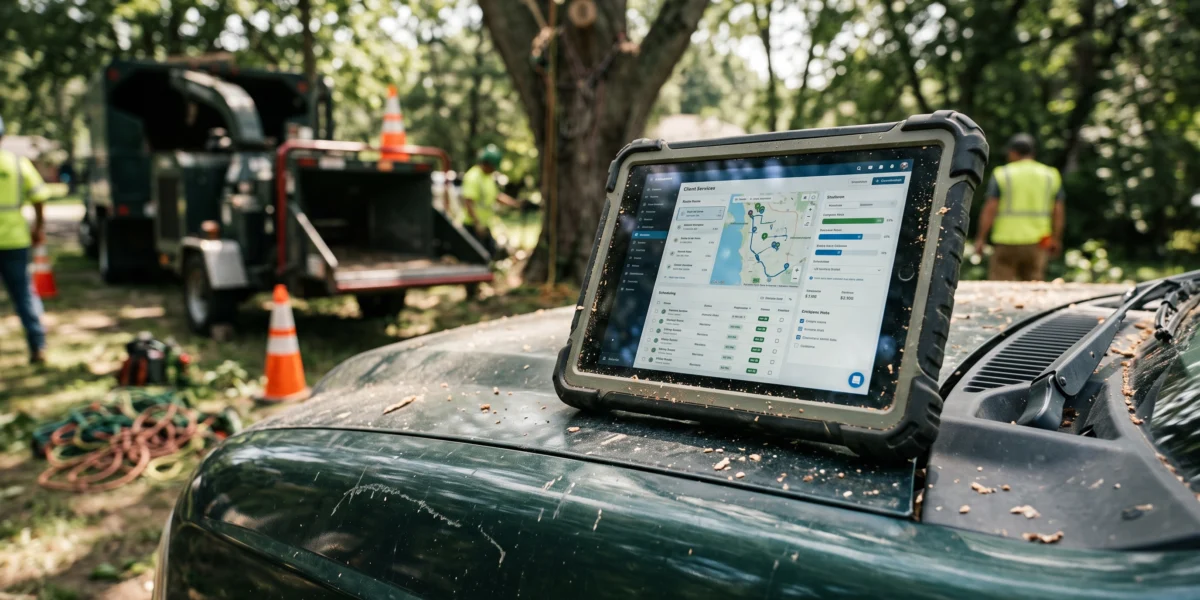
Let’s be completely direct with each other: you didn’t start a tree care company to spend your evenings chasing down missing job notes, deciphering illegible paper estimates, or explaining to an irate homeowner why your crew showed up three hours late. Yet, if you are like half the tree care business owners sitting on a $2 million fleet of chippers, bucket trucks, and loaders, you are still running your office operation on yellow legal pads, scattered text messages, and basic spreadsheets.
That isn’t just sloppy—it is actively destroying your profit margins. In 2026, managing your client lifecycle with makeshift systems is burning cash. If you want to build a high-margin enterprise that scales beyond your personal physical presence, adopting specialized client services software isn’t an optional upgrade. It is an operational survival mandate.
The Hidden Cost of Fragmented Systems
Every time a customer request sits in an unread inbox for 24 hours, you lose money. Every time an estimator forgets to detail access restrictions for a crane job, you lose money. Every time a crew leader has to call the office to ask for a property gate code, your billable labor rate plunges.
When you lack an integrated platform, your operation bleeds cash in three distinct areas:
- Quote Turnaround Delays: High-value residential clients hire the first professional arborist who delivers an accurate, detailed proposal. Slow response times kill conversion rates.
- Job Costing Blindness: You know your total revenue at the end of the month, but you have zero idea whether that 5-tree oak removal actually made money after factoring in crew hours, fuel, and equipment wear.
- Customer Friction: Uninformed clients call your office repeatedly asking for schedule updates, overwhelming your staff and creating unnecessary administrative overhead.
This is why understanding customer care software in tree care is essential for setting operational standards that protect your margins.
What Modern Client Services Software Actually Does
Do not confuse a true operational platform with a glorified digital address book. Modern client services software functions as the central operational nervous system of your entire business. It bridges the gap between field crews, sales estimators, office admin, and the client.
1. Dynamic Estimating and Rapid Proposals
Your sales reps should never be guessing on site. A robust client services system allows estimators to build detailed visual proposals directly from a tablet or smartphone. They can mark up satellite property photos, itemize specific tree work, and send a click-to-accept digital contract before they even drive off the driveway. When you need to scale beyond residential properties, having standardized digital tools is critical to crafting winning commercial tree service proposals for HOAs and municipalities.
2. Automated Communication Workflows
Clients don’t like surprises, especially when heavy machinery is rolling across their manicured lawns. Dedicated software automates appointment reminders, “crew on the way” SMS alerts, and post-job review requests. By automating these touchpoints, your office team spends zero time giving basic status updates, freeing them to handle actual operational exceptions.
3. Real-Time Job Costing and Labor Tracking
This is where the rubber meets the road. If your software doesn’t lock down labor and equipment burn rates, it isn’t serving your business. The best systems link crew clock-ins and job durations directly to individual invoices. This allows you to measure actual hours worked against estimated hours in real time. If you want to dive deeper into evaluating platforms built for field service, check out our detailed breakdown of ServiceTitan vs Jobber to see how different feature sets align with your growth goals.
Stop Guessing Your Margins: Job Costing Integration
If you don’t know your exact cost per crew hour down to the cent, you are pricing in the dark. Your operational overhead—including insurance premiums, chip truck maintenance, fuel, and capital depreciation—must be baked directly into how your client services system prices jobs.
When evaluating software, demand platforms that allow for granular data capture. Before buying another piece of heavy machinery, smart owners run their numbers through an ROI equipment calculator to determine exactly how many billable hours that asset must generate. Your client software should reflect these exact figures when building job quotes.
Furthermore, scaling requires pristine operational data. Before migrating your company to a modern cloud setup, take time to clean up your CRM database so you aren’t carrying legacy errors into your brand-new system.
How to Choose and Implement Without Disruption
Implementing software in a tree care company is notoriously difficult because field crews resist change. If a platform is too complex for a crew leader to navigate while wearing working gloves on a hot afternoon, they will bypass it completely—and your data integrity dies immediately.
Follow these non-negotiable rules for a successful software rollout in 2026:
- Prioritize Mobile Usability: Choose software with an intuitive, field-first mobile app. If the field interface is confusing, do not buy it.
- Mandate Field Adoption: Software adoption is not optional for your staff. Tie daily clock-outs and crew bonuses to accurate job logging inside the app.
- Leverage Cloud Accessibility: Ensure your system is cloud-based so estimators, office managers, and field leads view identical real-time data simultaneously. Review why cloud based CRM software is mandatory for scaling operations without expanding admin headcount.
- Focus on Client Retention: Don’t just focus on acquiring new clients. Use your client portal to establish a high-margin tree care client loyalty program that drives predictable, recurring PHC (Plant Health Care) revenue year after year.
The Bottom Line: Professionalize or Get Left Behind
The tree care industry is rapidly consolidating. Professionalized companies with slick digital communication, precise pricing engines, and flawless scheduling are taking market share away from traditional operators every single day.
Investing in the right client services software isn’t an added expense—it is a cost-reduction strategy that inflates your net margins and protects your crew’s billable hours. Stop running a multi-million dollar physical operation on outdated paper systems. Modernize your stack, get true visibility into your job costing, and build a scalable business that actually generates wealth.
Operator Insights
Join 2,000+ tree care owners getting our weekly operational tech teardowns.