Is Zendesk Help Desk Software Worth It for Tree Care Companies?
Most tree care owners waste thousands on customer support software they do not actually need. Here is the brutal truth about whether Zendesk help desk software belongs in your scaling tree service business.
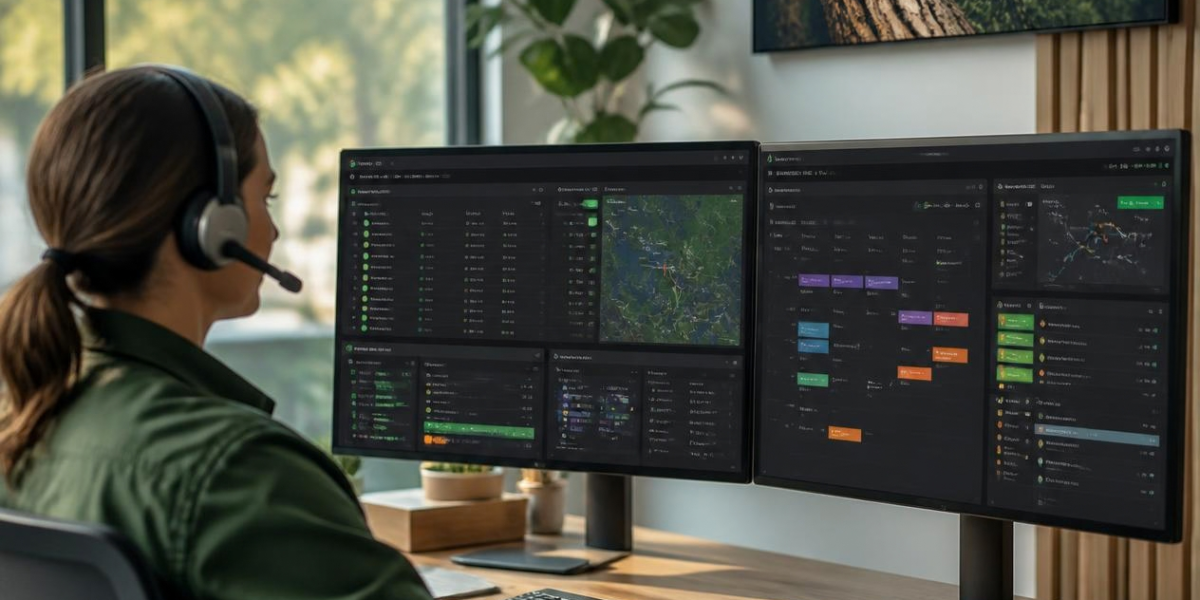
Stop Buying Tech Bloat: The Truth About Zendesk Help Desk Software in Tree Care
Let’s cut through the software vendor fluff. Most tree care owners love shiny tech objects. They hear about enterprise tools used by Silicon Valley startups and think, “If I buy that, my office staff will magically get organized.”
Then they drop thousands of dollars setting up Zendesk help desk software, only to realize their dispatchers are still using sticky notes, their account managers are losing track of property manager emails, and their customer satisfaction scores are in the gutter. If you do not clean up your CRM database first, adding another software tool just accelerates your operational chaos.
In 2026, software spending must tie directly to bottom-line efficiency, crew utilization, and margin expansion. So, is Zendesk a high-ROI asset for a tree care enterprise, or is it pure operational bloat? Let’s break down the hard operational facts.
What Does Zendesk Actually Do for a Field Operations Business?
Zendesk is an enterprise-grade omnichannel ticketing and customer support platform. It takes inbound communications—phone calls, web forms, emails, text messages, and social media inquiries—and consolidates them into a single trackable queue (a “ticket”).
In a typical residential tree service doing under $2M in revenue, your field management software (like Jobber, SingleOps, or ArboStar) already handles basic client messaging. Buying Zendesk at that stage is burning cash. However, once you cross the $3M to $5M threshold—especially if you handle high-volume commercial contracts, HOAs, and municipal accounts— standard field software communication tools crumble. That is where a dedicated ticket management workflow enters the equation.
When Zendesk Help Desk Software Makes Sense (And When It Doesn’t)
When You MUST Consider Zendesk:
- You manage high-volume commercial accounts: Property managers do not want to wait 24 hours for a status update on a hazardous oak limb hanging over a parking space. Zendesk allows you to set Service Level Agreements (SLAs) with hard timers, forcing your office team to respond within 15 minutes.
- You run a multi-person customer service team: When you have three or more office personnel answering calls, emails disappear into individual inboxes. Zendesk centralizes all inquiries so no lead or complaint gets buried. If you are struggling with missed inbound opportunities, read our guide on why your tree care business needs contact center software.
- You get crushed by high lead volumes during storm events: When a severe storm hits, your phone lines explode. Zendesk allows automated macro-responses, routing rules, and instant queue organization so your team can process hundreds of emergency calls without losing sanity.
- You are running web-based chat: Integrating live chat software for tree care directly into a centralized help desk ensures high-value tree removal requests convert before a competitor answers their phone.
When Zendesk Is a Complete Waste of Money:
- You have fewer than 3 office team members: If one office administrator handles sales intake and scheduling, introducing Zendesk adds unnecessary clicks and friction. Stick to a solid consumer relationship management system designed specifically for green industry workflows.
- You expect it to replace your tree industry CRM: Zendesk is NOT a tree service job-costing software. It will not calculate your bucket truck ROI, nor will it handle route optimization for tree services. It is strictly a customer communication and support tracking engine.
3 Operational Workflows That Drive Real ROI in Zendesk
If you decide to deploy Zendesk help desk software in 2026, do not use it like a glorified email inbox. Configure these three specific workflows to protect your profit margins:
1. Automated Ticket Escalation for Commercial Claims
Commercial property managers switch tree vendors for one primary reason: poor communication. You can program Zendesk to automatically flag and elevate any ticket containing key terms like “HOA board,” “property damage,” “hazard,” or “commercial contract.” If an account manager does not respond within 30 minutes, the ticket automatically escalates to the General Manager. When competing for massive contracts, execution speed wins. Learn how this fits into crafting winning commercial tree service proposals.
2. Standardized Pre-Priced Service Inquiries
Your office staff shouldn’t waste 15 minutes typing custom replies for routine inquiries like stump grinding estimates or basic consultations. Zendesk’s macro templates allow your team to fire off professional, branded responses with one click, integrating automated estimate follow-ups to keep leads moving down the funnel automatically.
3. Seamless Inbound Call & Answering Service Logging
Whether you choose an in-house receptionist vs. answering service, every call note must land in a trackable repository. Zendesk integrates directly with VoIP systems (like Talkdesk, RingCentral, or Zendesk Talk), recording call logs directly onto the client’s file. No more “he said, she said” when a client claims your crew showed up on the wrong day.
Zendesk vs. Tree-Specific CRMs: What’s the Verdict?
Tree care owners often ask me: “Can’t I just stick with my all-in-one software?”
If you are evaluating the best tree service software systems available in 2026, understand that field software is built for scheduling, dispatching, and field invoicing—not complex multi-channel support ticketing. However, for 90% of tree service operators doing under $3M, a robust cloud-based CRM software is more than adequate.
Only bolt on Zendesk if customer support bottlenecks are actively costing you client retention or slowing down your sales cycle. If you aren’t sure, look at your numbers. If your office team takes more than 2 hours to respond to new inbound leads, or if commercial clients are complaining about slow updates, your communication stack is broken.
The Bottom Line
Software won’t fix sloppy operations. If your pricing logic is broken, go fix your math with our guide on how to price tree removal before you worry about help desk software. But if your operational machine is running tight, you are scaling past $3M+, and client communication is your primary bottleneck, Zendesk help desk software provides the structure, SLA tracking, and accountability required to dominate your market.
Operator Insights
Join 2,000+ tree care owners getting our weekly operational tech teardowns.