Stop Burning Billable Hours: Why Your Tree Care Business Needs a Real Customer Service Ticketing System
Managing tree care requests on sticky notes and personal cell phones is destroying your operational margins. Discover how implementing a customer service ticketing system stops profit leaks and streamlines your field communications.
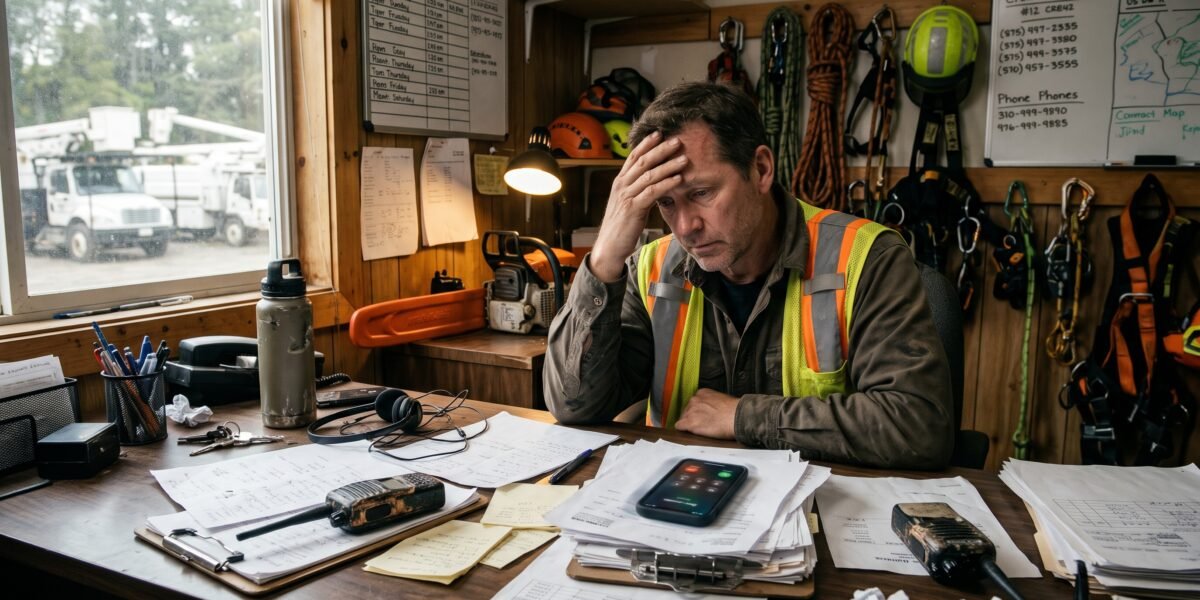
Why Your “System” of Sticky Notes and Text Messages Is Bleeding Money
Let’s be honest: if your tree care business relies on your office manager’s memory, voicemail transcriptions, and random text messages from crew leaders to track customer requests, you don’t have an operational workflow. You have an organized fire brigade. And it is costing you tens of thousands of dollars every single season.
When a homeowner calls to ask why their stump grinding wasn’t finished, or a commercial property manager emails demanding an updated certificate of insurance, where does that request go? If it lives in an unread inbox or on a yellow pad on someone’s desk, it’s hanging by a thread. In 2027, operating at scale without a dedicated customer service ticketing system is a fast track to burnt-out staff, destroyed profit margins, and pissed-off clients.
If you want to grow past a few trucks, you must treat internal and external communications with the same mechanical discipline you apply to rigging down a 100-foot red oak. Loose ends kill profits.
What a Customer Service Ticketing System Actually Does for Tree Care
A customer service ticketing system isn’t just “help desk software” for tech nerds; it is an operational control board. Every single inbound request—whether it’s a quote inquiry, a hazard assessment request, a billing dispute, or a post-storm emergency call—gets converted into a tracked ticket assigned to a specific human with a deadline.
Here is how a real ticketing architecture stops profit leaks across your operation:
1. Zero Dropped Requests and Instant Accountability
When a client calls while your estimator is climbing or running a crane, that request cannot rely on a phone callback that might happen three days later. A ticketing system captures the request, assigns it to the estimator’s queue, and flags it as overdue if it isn’t touched within 24 hours. When you integrate your intake with comprehensive CRM management software for tree care businesses, every single customer touchpoint is documented against their account history.
2. Protection of Crew Hours and Job Costing
Think about how much money you lose when a crew arrives on site and the client says, “Oh, I texted your office yesterday to add the birch trimming to today’s work.” If that message was buried in an office admin’s inbox, your crew is now standing idle at $175 to $250 an hour while the crew leader tries to call the estimator for a price adjustment.
With a ticketing system integrated into your field management, change orders are logged, approved, and updated on the digital work order in real time. No guessing, no free work, and no wasted crew hours.
3. Escalation Protocols for Post-Job Damage and Complaints
Accidents happen. A lowering branch swings wide and chips a client’s composite deck. If the client calls in furious and their message gets passed around four different people via text message, the client feels ignored. They don’t call back; they leave a 1-star Google review that costs you $50,000 in lost prospective business over the next six months.
A structured help desk software solution for tree care ensures that high-priority tickets (like property damage or safety hazards) trigger immediate SMS alerts to the operations manager, allowing you to resolve the issue before it escalates into a public relation disaster.
Stop Forcing Generic Software into Arborist Workflows
A common mistake tree care owners make when attempting to professionalize their office is buying cheap, off-the-shelf software designed for completely different industries. Trying to run a heavy equipment, high-risk field service company using tools built for retail or salons—such as trying to adapt Vagaro customer service features—is an absolute waste of time and money. Hairdressers don’t deal with 5-ton wood chips, underground utilities, or complex job costing.
Your ticketing tool must handle multi-touch workflows that connect to your field operations, job costing data, and dispatch schedules. If you are still relying on legacy paper systems, it is time to read the hard truth about ditching client relationship management tools on pen and paper.
Key Features Your Tree Care Ticketing System Must Have
If you are evaluating options in 2027, do not get distracted by flashy marketing buzzwords. Demand these four non-negotiable operational capabilities:
- Omnichannel Intake: The software must automatically turn emails, website contact forms, inbound SMS messages, and phone voicemails into a single unified ticketing dashboard.
- Asset and Job Tagging: Tickets must seamlessly attach to specific property addresses, existing job estimates, and equipment allocation records.
- Automated SLA Tracking: Service Level Agreements (SLAs) set hard time limits. If a commercial client ticket isn’t acknowledged in 2 hours, it automatically escalates up the management chain.
- Bidirectional Field Integration: Your office team and your field arborists must be able to view, comment on, and resolve tickets from mobile devices on site.
The Bottom Line: Scale Requires Systems, Not Heroics
If your tree care business relies on key employees being “heroes” who remember every detail and work 70 hours a week to clean up administrative messes, your business cannot scale. You don’t have a growth strategy; you have a personnel dependency.
By implementing a dedicated customer service ticketing system, you replace human error with mechanical reliability. You protect your job margins, keep your crews productive, and deliver the professional experience that allows you to charge premium prices. Stop burning margins on broken communication systems. Stop bleeding profits by upgrading your client services software for tree care today, build a real backbone for your back office, and take control of your operation in 2027.
Operator Insights
Join 2,000+ tree care owners getting our weekly operational tech teardowns.