Housecall Pro Customer Service: Is Support Good Enough When Your Tree Business is Stalled?
When a software glitch halts your field crew, waiting hours for customer support destroys your daily billable rate. Here is a candid breakdown of Housecall Pro customer service for tree care operators looking to scale efficiently.
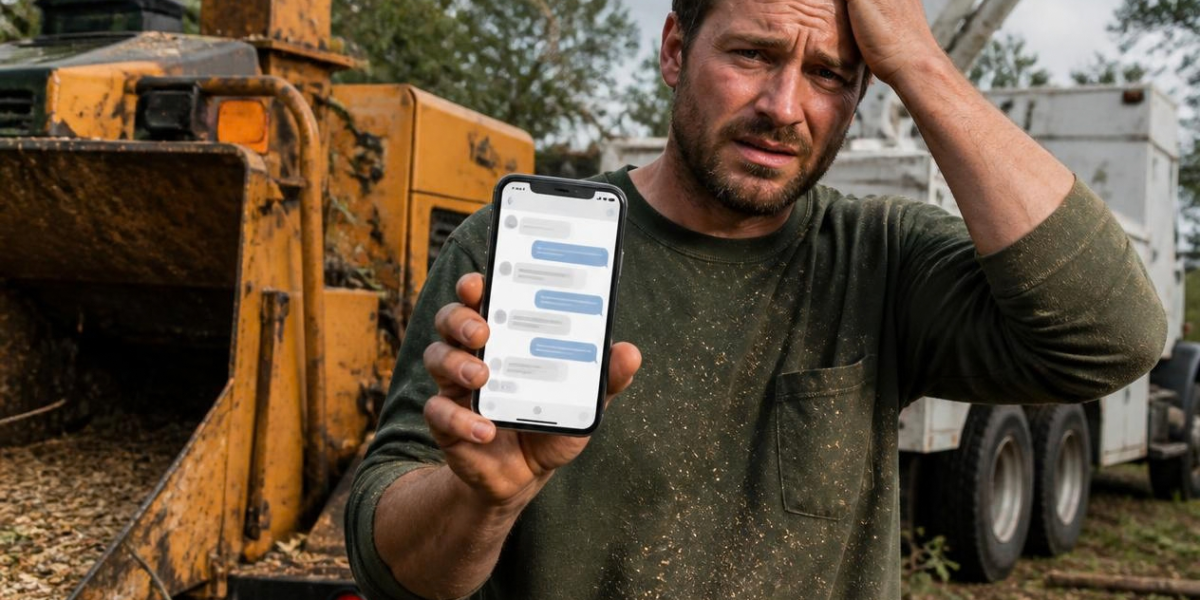
The Hidden Cost of Software Support Delays in Tree Care
Every minute your bucket truck sits idling on a residential street costs you money. When you add up fuel, crew wages, overhead, and capital depreciation, your operational burn rate is likely between $150 and $300 an hour. If you do not know your exact burn rate, you need to learn how to calculate hourly equipment costs for tree services immediately.
When your field management software glitches at 7:00 AM during morning dispatch, or an estimator cannot pull up an active site plan in front of a high-value client, you do not need an automated chatbot or a canned reply. You need an answer immediately. In the field service management world, software reliability is only half the equation—the other half is customer support responsiveness.
This article provides a candid operational evaluation of Housecall Pro customer service specifically for tree care business owners. We will break down how their support system holds up under true field conditions, where it excels, and where it leaves tree care operators exposed to expensive downtime.
How Housecall Pro Customer Service Operates
Housecall Pro built its platform primarily around chat-first customer support. While this model works well for solo technicians or low-overhead service providers, running a modern tree care enterprise with multi-man crews, heavy equipment, and complex hazard removals demands a higher tier of responsiveness.
1. Chat-First Support Architecture
Housecall Pro pushes users toward their in-app and web-based chat widget. For minor administrative questions—such as setting up custom invoice templates or integrating payment gateways—the chat feature is relatively convenient. Response times during standard business hours typically range from a few minutes to an hour.
However, when a job site crisis occurs—such as a sync error preventing a field foreman from accessing safety notes or job specifications—typing back and forth in a chat widget while four crew members stand around is unacceptable. You are paying for labor while watching billable hours burn.
2. Tiered Phone Support Availability
Direct phone support with Housecall Pro is generally locked behind higher-tier subscription plans (such as the XL or custom scale plans). If you are on an entry-level plan, getting a live human on the phone requires requesting a callback or navigating automated escalation paths.
For a scaling tree service company, lack of immediate phone support is a massive operational risk. When evaluating why cloud-based CRM software is mandatory for tree care scaling, priority phone support should be treated as a non-negotiable line item, not an optional luxury.
Evaluating Customer-Facing Support Features in Housecall Pro
In the tree care industry, “customer service” isn’t just the support you receive from the software vendor; it is also the communication workflow the software provides to your tree care clients. Housecall Pro includes several automated features designed to streamline client interaction:
- “On My Way” SMS Notifications: Sends text updates with technician photos and tracking links to homeowners.
- Automated Invoicing & Payment Collection: Enables fast online payment processing immediately upon job completion.
- Review Generation Pipelines: Triggers review requests to happy clients to build local Google authority.
While these client-facing tools work smoothly for basic residential maintenance, tree care operators frequently run into walls when managing complex workflows like commercial tree service proposals or multi-day municipal removals. When custom scheduling logic or partial billing fails, you are forced back into the Housecall Pro support queue to resolve client-facing communication errors.
Where Housecall Pro Customer Support Struggles with Tree Care Scale
Housecall Pro is a generalist Field Service Management (FSM) platform. It was built to serve plumbers, carpet cleaners, and HVAC technicians—trades with predictable, standardized line items. Tree care is fundamentally different.
1. Lack of Trade Specificity in Support Reps
When you contact Housecall Pro customer service about an issue with tree-specific job costing, unit pricing, or complex equipment tracking, the support agent on the other end usually has zero context regarding tree care operations. They do not understand the distinction between a crane-assisted removal and a standard canopy prune, nor do they understand why pricing tree removal using standard hourly risk-based formulas requires highly flexible line-item quoting tools.
2. Feature Requests vs. Real Solutions
When tree care owners ask Housecall Pro support how to handle production tracking, crew leader productivity logs, or specialized equipment maintenance tracking, the standard answer from support is often: “That is currently a feature request.”
If you rely on third-party integrations like Milwaukee ONE-KEY for tool tracking or dedicated dispatching platforms, getting support to troubleshoot broken API syncs can turn into a ping-pong match between vendors.
Housecall Pro vs. Industry Competitors: Support Comparison
If you are reviewing the 5 best tree service software systems of 2026, you need to weigh support quality alongside monthly subscription costs.
- Jobber: Offers accessible live chat and phone support across most tiers, making it easier for mid-sized operators to reach a real human quickly.
- ServiceTitan: Provides deep enterprise implementation and dedicated account management, but charges enterprise-level prices. Compare the trade-offs in our breakdown of ServiceTitan vs Jobber.
- Housecall Pro: Excellent user experience and customer-facing marketing automation, but support relies heavily on chat queues unless you pay top tier prices.
Operational Recommendations for Tree Care Owners
If you are currently using Housecall Pro or considering adopting it in 2026, follow these guidelines to protect your operations from support-induced downtime:
1. Upgrade to a Plan with Priority Phone Support
Do not attempt to run a multi-crew tree care company on a base plan that restricts you to chat-only support. Pay for the plan level that grants immediate phone access. The cost difference is negligible compared to the expense of a single stalled crew.
2. Automate Client Communication to Reduce Front-Office Load
Leverage the platform’s native automation for estimate follow-ups. Utilizing automated estimate follow-ups to close jobs ensures your sales pipeline keeps moving even when your office staff is dealing with operational issues. If call handling is a bottleneck, evaluate an in-house receptionist vs. an answering service to keep administrative flow uninterrupted.
3. Build Internal Standard Operating Procedures (SOPs)
Do not rely on software support to train your staff. Document internal SOPs for how your estimators quote, how your crew leaders mark jobs complete, and how your office bills clients. When your team follows strict internal protocols, software errors drop dramatically, reducing your reliance on vendor support lines.
The Bottom Line on Housecall Pro Customer Service
Housecall Pro offers a clean, user-friendly platform with strong client-facing communication features. However, its generic trade positioning and chat-centric support model mean that scaling tree care businesses must upgrade to top-tier plans to get the rapid response times required in high-risk arboriculture.
If you run a single truck operation, Housecall Pro’s support structure is completely adequate. If you are operating multiple crews, managing heavy equipment, and pushing for rapid annual growth, ensure you secure direct phone support—or look toward trade-specific platforms built explicitly for the heavy operational demands of tree care.
Operator Insights
Join 2,000+ tree care owners getting our weekly operational tech teardowns.